The Legend of the Sfogliatella
The story begins in the 17th century at the Convent of Santa Rosa in Conca dei Marini, located along the spectacular Amalfi Coast. According to legend, the creation happened by chance. One day, the nun in charge of the kitchens noticed she had some leftover semolina flour cooked in milk. Instead of throwing it away, she decided to experiment.
She added dried fruit, sugar, and lemon liqueur to the semolina to create a filling. She then placed this mixture between two layers of lard-enriched dough, shaping it to resemble a monk’s hood. The pastry was baked and became an instant success among the nuns and the local villagers. For over 150 years, the recipe remained a secret held within the convent walls, known as the Santa Rosa (which is still a version of the pastry today, usually topped with custard and a black cherry).
From the Convent to the City
The recipe finally "escaped" the convent in 1818. A Neapolitan pastry chef named Pasquale Pintauro managed to obtain the secret instructions. Pintauro was a man of great culinary vision; he simplified the recipe and modified the shape into the shell-like layers we recognize today. He opened a shop on Via Toledo in Naples, transforming his tavern into a laboratory for this new treat.
The Two Versions: Riccia vs. Frolla
Today, when you walk into a Neapolitan pasticceria, you will be asked the classic question: "Riccia o frolla?"
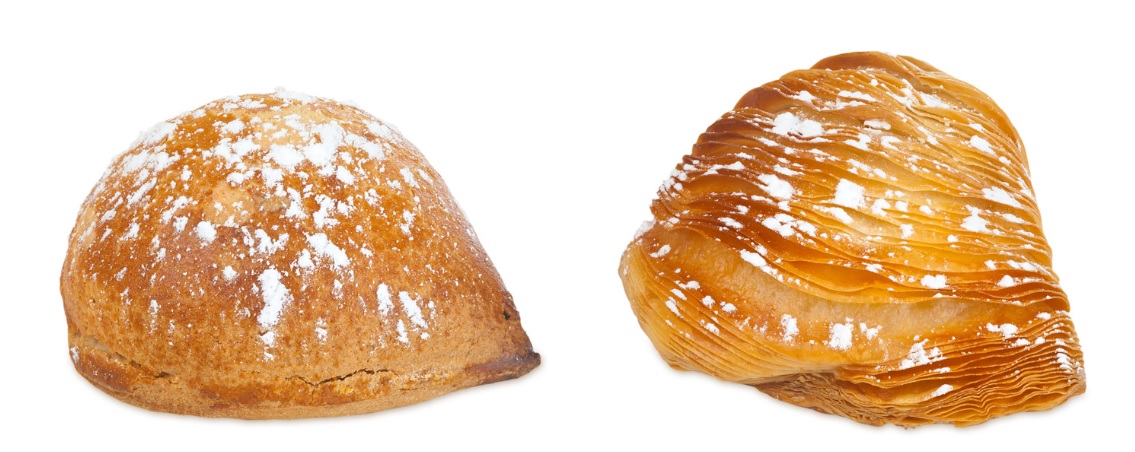
Sfogliatella Riccia: This is the "curly" or "flaky" version. It is made with many incredibly thin layers of crispy dough. Achieving this texture requires immense skill, as the dough must be rolled out very thin and coated with lard to create the characteristic "crunch."
Sfogliatella Frolla: This is the "shortcrust" version. It uses the same delicious filling of ricotta, semolina, sugar, and candied fruit, but it is wrapped in a smooth, soft shortcrust pastry. It is easier to eat on the go and has a more delicate texture.
Questions
- Where was the original version of the sfogliatella created, and what was the initial reason for its invention?
- Who was Pasquale Pintauro, and how did he change the history of this pastry?
- Explain the main technical differences between a "Riccia" and a "Frolla" sfogliatella.
- How does the "Santa Rosa" version differ from the modern sfogliatella riccia found in Naples?
- In your opinion, why do you think the sfogliatella has become such an important symbol of Neapolitan identity?