Listen to the recording and mark the correct answers.
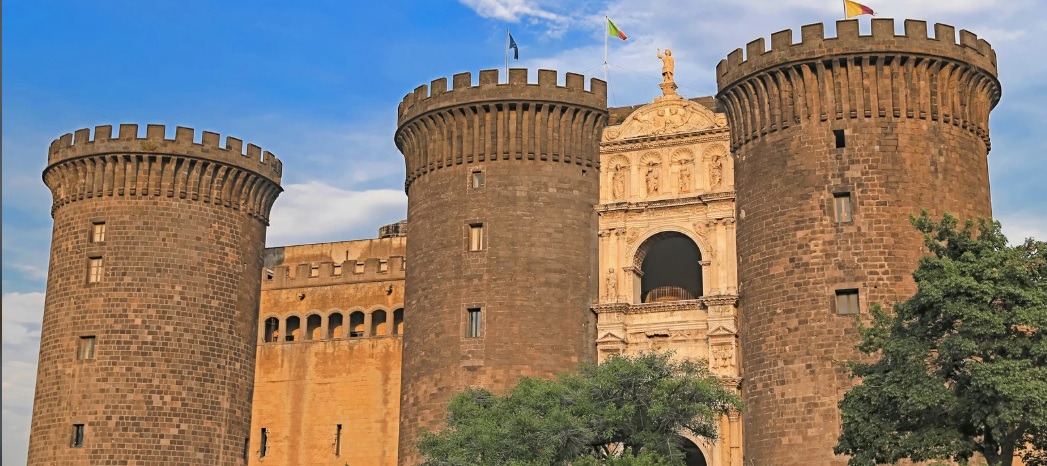
Castel Nuovo, popularly known as the Maschio Angioino, is one of the most famous symbols of Naples. This massive medieval fortress sits in a prominent position in front of the Piazza Municipio and the city's harbor. Its dual name reflects its history: "Castel Nuovo" (New Castle) distinguished it from the older Castel dell'Ovo, while "Maschio Angioino" refers to its construction by the House of Anjou.
The castle was commissioned in 1279 by Charles I of Anjou, who moved the capital of the Kingdom of Sicily from Palermo to Naples. However, much of the architectural beauty seen today is the result of the Aragonese rule. When Alfonso V of Aragon conquered Naples in the 15th century, he ordered the castle to be rebuilt and reinforced. One of its most striking features is the magnificent Triumphal Arch, built in white marble between two dark stone towers to celebrate Alfonso’s victorious entry into the city.
Inside, the castle houses the Palatine Chapel, which contains fragments of frescoes attributed to Giotto, and the Hall of the Barons, famous for its grand vaulted ceiling. For centuries, the castle served not only as a royal residence but also as a fortress and a center for art and culture. Today, it remains a majestic guardian of the Neapolitan shoreline, hosting the Civic Museum and various cultural events.