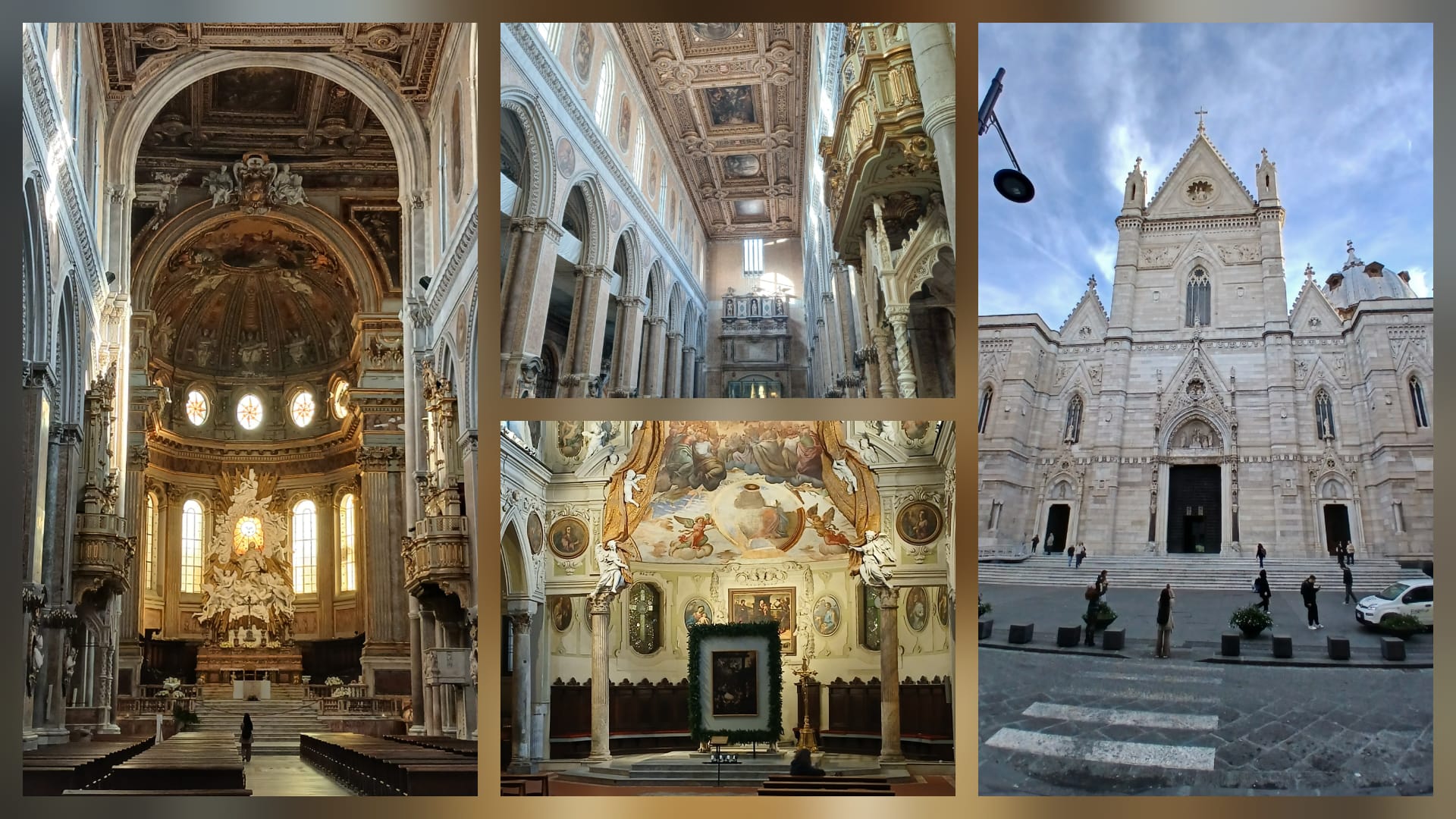
The Cathedral of the Assumption of Mary, commonly known as the Duomo di Napoli, is the main Catholic church in Naples. It is famous for housing the
JXUwMDNhJXUwMDBlJXUwMDAzJXUwMDAwJXUwMDBi
of Saint Januarius (San Gennaro), a sacred relic that attracts thousands of pilgrims from around the world.
Located in the heart of the city, the Duomo stands on Via Duomo, near the ancient Greek-Roman streets and close to the
JXUwMDJhJXUwMDE3JXUwMDA4JXUwMDBjJXUwMDA4JXUwMDA3JXUwMDFk
of the city's early history. The current cathedral was built on the site of two early Christian basilicas, Santa Restituta and Stefania. During the
JXUwMDM1JXUwMDA4JXUwMDAxJXUwMDBkJXUwMDBjJXUwMDEzJXUwMDE3JXUwMDBk
period, Saint Januarius was declared the primary patron saint of Naples.
At the end of the 13th century, King Charles I of Anjou ordered the original structures to be replaced to make way for a grand Gothic cathedral, but parts of the older Basilica of Santa Restituta were
JXUwMDI4JXUwMDAyJXUwMDE3JXUwMDE2JXUwMDE2JXUwMDE3JXUwMDA0JXUwMDEzJXUwMDAx
and can still be accessed from inside the Duomo. This ancient section remains one of the cathedral’s most fascinating
JXUwMDNlJXUwMDAzJXUwMDA0JXUwMDE1JXUwMDAxJXUwMDA3JXUwMDE3JXUwMDE2
, housing the oldest baptistery in the West.
Construction of the current cathedral began in 1272, commissioned by the Angevin dynasty. The chosen architects worked on the project through several
JXUwMDNjJXUwMDAxJXUwMDA2JXUwMDAyJXUwMDA1JXUwMDAxJXUwMDE2
until its consecration in the early 14th century. The cathedral was finally completed under the reign of Robert of Anjou in 1314.
By the early 17th century, the cathedral was
JXUwMDNkJXUwMDA4JXUwMDBmJXUwMDA3JXUwMDA5JXUwMDAwJXUwMDA1JXUwMDFhJXUwMDFiJXUwMDBkJXUwMDAx
to celebrate the city's devotion to its patron saint. Architect Francesco Grimaldi designed a spectacular side chapel to house the saint's relics, known as the Royal Chapel of the Treasure of San Gennaro. This chapel, which was decorated by the finest artists of the Baroque era, became a
JXUwMDM1JXUwMDBjJXUwMDEyJXUwMDA3JXUwMDExJXUwMDE3JXUwMDAyJXUwMDE5JXUwMDBjJXUwMDA2JXUwMDA2
of art and faith. The magnificent bronze gates and silver altars were crafted with immense detail, and since then, the vial containing the saint's blood has been preserved inside the chapel, where it is the focus of the famous miracle of liquefaction.