The Royal Origins: From Poland to Paris
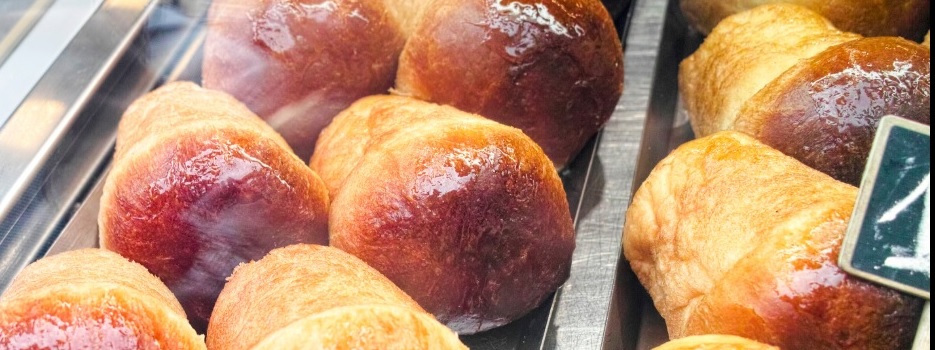
The Babà is perhaps the most surprising of all Neapolitan sweets. While the sfogliatella was born locally on the Amalfi Coast, the Babà is a "cosmopolitan" dessert with a royal and international history. Its journey to Naples is a tale of kings, exile, and culinary innovation.
The Royal Origins: From Poland to Paris
The ancestor of the Babà was not Italian at all. It began with Stanislaus Leszczyński, the exiled King of Poland, who lived in the Lorraine region of France in the 18th century. Legend says the King found the traditional local Gugelhupf cake too dry. To make it more palatable, he decided to soak it in a sweet wine (later replaced by rum).
The King was a great fan of the stories from The Thousand and One Nights, and he allegedly named the cake after his favorite character: Ali Baba. Later, the recipe traveled to the royal courts of Paris, where legendary pastry chefs refined the dough into the soft, mushroom-shaped brioche we know today.
The Arrival in Naples
The Babà arrived in Naples in the early 19th century via the "Monsù". The Monsù (from the French Monsieur) were French-trained chefs who worked for the aristocratic families of the Kingdom of the Two Sicilies. Neapolitan pastry chefs, famous for their ability to improve upon any recipe, took the French dessert and perfected it.
They realized that the porous, elastic dough was the perfect "sponge" for a syrup made of water, sugar, and high-quality rum. They also gave it its iconic elongated shape, making it easy to eat while standing or walking through the city's alleys.
The Art of the Perfect Babà
A true Neapolitan Babà is a masterpiece of balance. The dough must be extremely light and airy, filled with tiny holes to absorb the syrup without falling apart.
- The Texture: It should be elastic; if you squeeze a perfect Babà, it should bounce back like a sponge.
- The Syrup: It must be moist but not dripping, with a delicate balance of sweetness and the sharp kick of rum.
- Variations: While the classic version is plain, many pasticcerie now serve it "mignon" (small) or sliced open and filled with whipped cream, Nutella, or fresh strawberries.
Comprehension Questions
- How did the exiled King Stanislaus Leszczyński contribute to the creation of the Babà?
- What is the etymological origin of the name "Babà" according to the legend?
- Who were the "Monsù" and what was their role in bringing this dessert to Naples?
- Describe the physical characteristics and the texture of a high-quality Neapolitan Babà.
- Why is the Babà considered a "cosmopolitan" dessert compared to the sfogliatella?
- How did the exiled King Stanislaus Leszczyński contribute to the creation of the Babà? The King found the traditional local cake (Gugelhupf) too dry to eat. To make it more palatable, he decided to soak it in a sweet wine, a technique that eventually evolved into the modern practice of using a rum-based syrup.
- What is the etymological origin of the name "Babà" according to the legend? According to the legend, the King was a fan of the stories from The Thousand and One Nights and allegedly named the dessert after Ali Baba, his favorite character from the book.
- Who were the "Monsù" and what was their role in bringing this dessert to Naples? The Monsù (derived from the French Monsieur) were French-trained chefs who worked for aristocratic families in the Kingdom of the Two Sicilies. They acted as the culinary bridge, bringing the refined French brioche recipe to Naples in the early 19th century.
- Describe the physical characteristics and the texture of a high-quality Neapolitan Babà. A high-quality Babà has an iconic elongated or mushroom shape and an elastic, porous texture. The dough must be light and airy so that it acts like a sponge; if you squeeze it, it should bounce back. It should be moist with syrup but not dripping.
- Why is the Babà considered a "cosmopolitan" dessert compared to the sfogliatella? While the sfogliatella was born locally on the Amalfi Coast, the Babà is considered "cosmopolitan" because of its international royal history. Its journey spans multiple countries: it was conceived by a Polish King in France, refined by Parisian pastry chefs, and finally perfected by Neapolitan bakers.