The Basilica of Santa Maria Maggiore: A Romanesque Masterpiece
Listen to the recording and mark the correct answers.
Vocabulary Highlights
- Vow: A solemn promise, often made to a religious figure.
- Sober: Serious, sensible, and without unnecessary decoration (often used in architecture).
- Inlaid: A technique where different materials (like wood or stone) are set into a surface to create a design.
- Final resting place: A poetic way to refer to someone's grave or tomb.
- Testament to: Evidence or proof of something's existence or quality.
The Basilica of Santa Maria Maggiore: A Romanesque Masterpiece
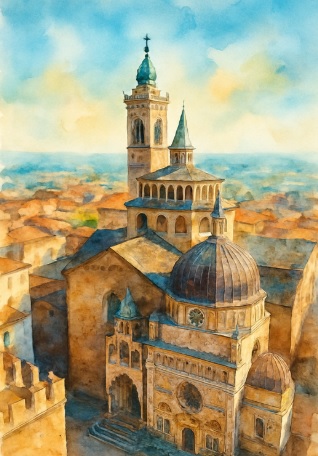
If the Duomo is the spiritual head of Bergamo, the Basilica of Santa Maria Maggiore is undoubtedly its artistic heart. Unlike most cathedrals, this church was not built by the bishop, but by the citizens of Bergamo themselves as a result of a vow made to the Virgin Mary in 1133 to protect the city from a devastating plague.
Located in the Piazza del Duomo, the Basilica is unique because it lacks a main central entrance. Access is gained through side doors, the most famous being the "Gate of the Red Lions." This architectural choice was made because the church was built directly against the back of the Bishop's Palace. While the exterior displays a sober, elegant Romanesque style, the interior offers a stunning transition into the Baroque era, filled with intricate decorations that leave visitors speechless.
A Treasure Trove of Art
One of the most fascinating features of the Basilica is its collection of Renaissance tapestries and the incredible inlaid wood panels (intarsie) designed by the famous artist Lorenzo Lotto. These panels depict scenes from the Old Testament with such detail and perspective that they look like paintings.
The Basilica also serves as the final resting place of the world-renowned opera composer Gaetano Donizetti, who was born in Bergamo. His funeral monument is a popular spot for music lovers who visit the city to pay their respects to one of the masters of the bel canto style.
Historical Significance
Construction began in 1137 and continued for several centuries. Because it was managed by a powerful local foundation called the MIA (Congregazione della Misericordia Maggiore), the church was independent of the clergy for much of its history. This allowed the citizens to transform it into a magnificent gallery of art and a symbol of civic pride. Today, the golden ceilings and grand frescoes remain a testament to the wealth and devotion of medieval Bergamo.